
Willowbank House
Residential (Alterations and Additions)
Located in Fitzroy North, Victoria, Australia
Built by Bird Co
Photography Cricket Saleh
Brief
Thoughtful moves to create a cohesive family home consolidating multiple previous additions and alterations.
Redesign the living spaces, update the main bathroom - connect and make the house feel unified.
Site
The site is located in Fitzroy North on an idyllic winding street.
The home is a Californian bungalow and quite unusually was recently renovated when we started working together.
The owners purchased the Californian bungalow with an existing rear extension, likely completed in the late 1990s or early 2000s. Designed to mirror the character of the original home, the addition replicated key bungalow elements, including a bay window echoing the original façade. The extension also relocated the primary living spaces (kitchen, lounge and dining) to the rear of the house to capture the northern aspect.
Design Response
Our design response was simple - to work with, rather than against, the many layers of additions made to the Californian bungalow over time.
The aim was to create a warm, textured and cohesive family home, with minimal and considered interventions.
European interior design provided precedence for the project informing its tectonic materiality, refined detailing and layered tonal palette - balancing beauty with functional design.
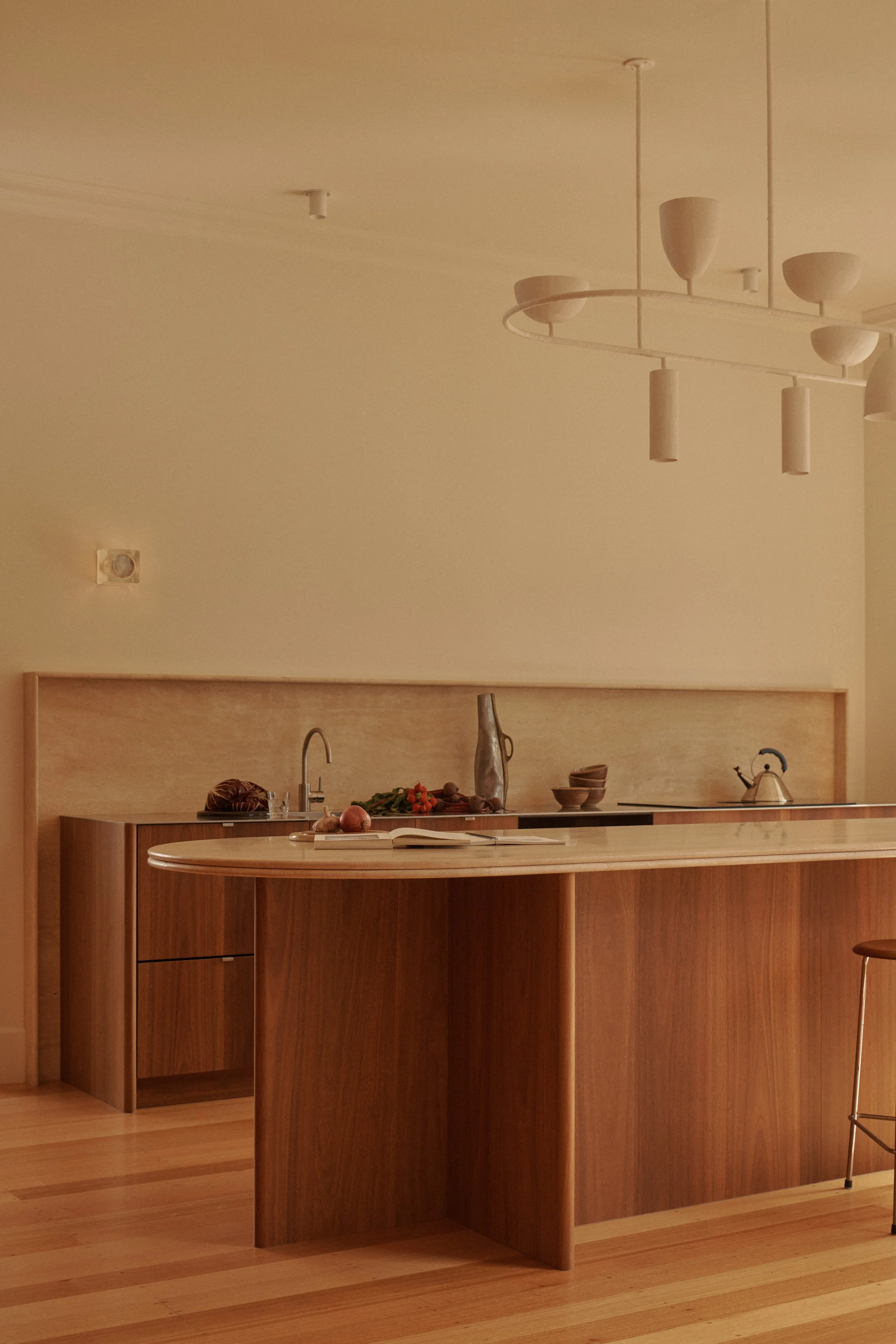
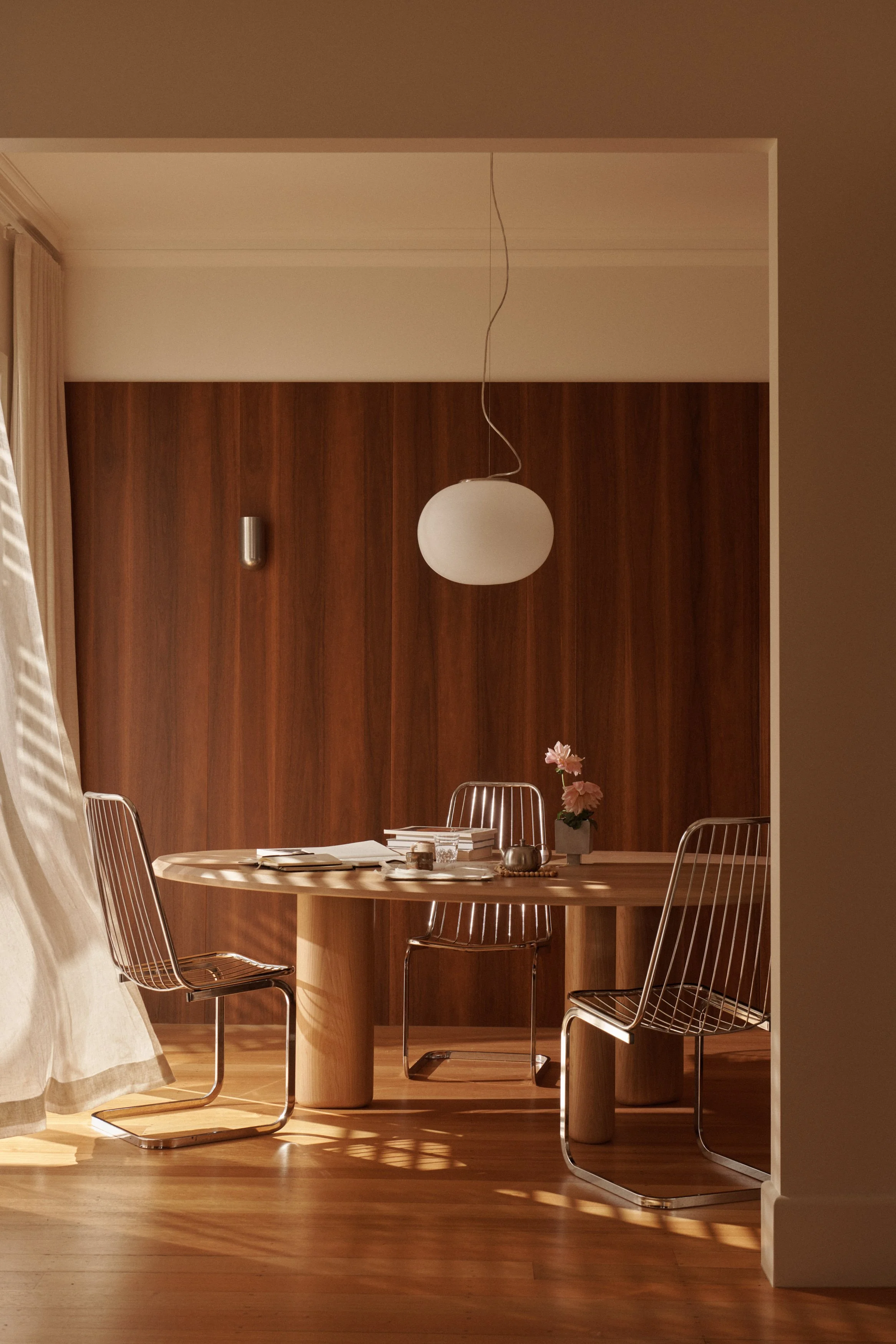
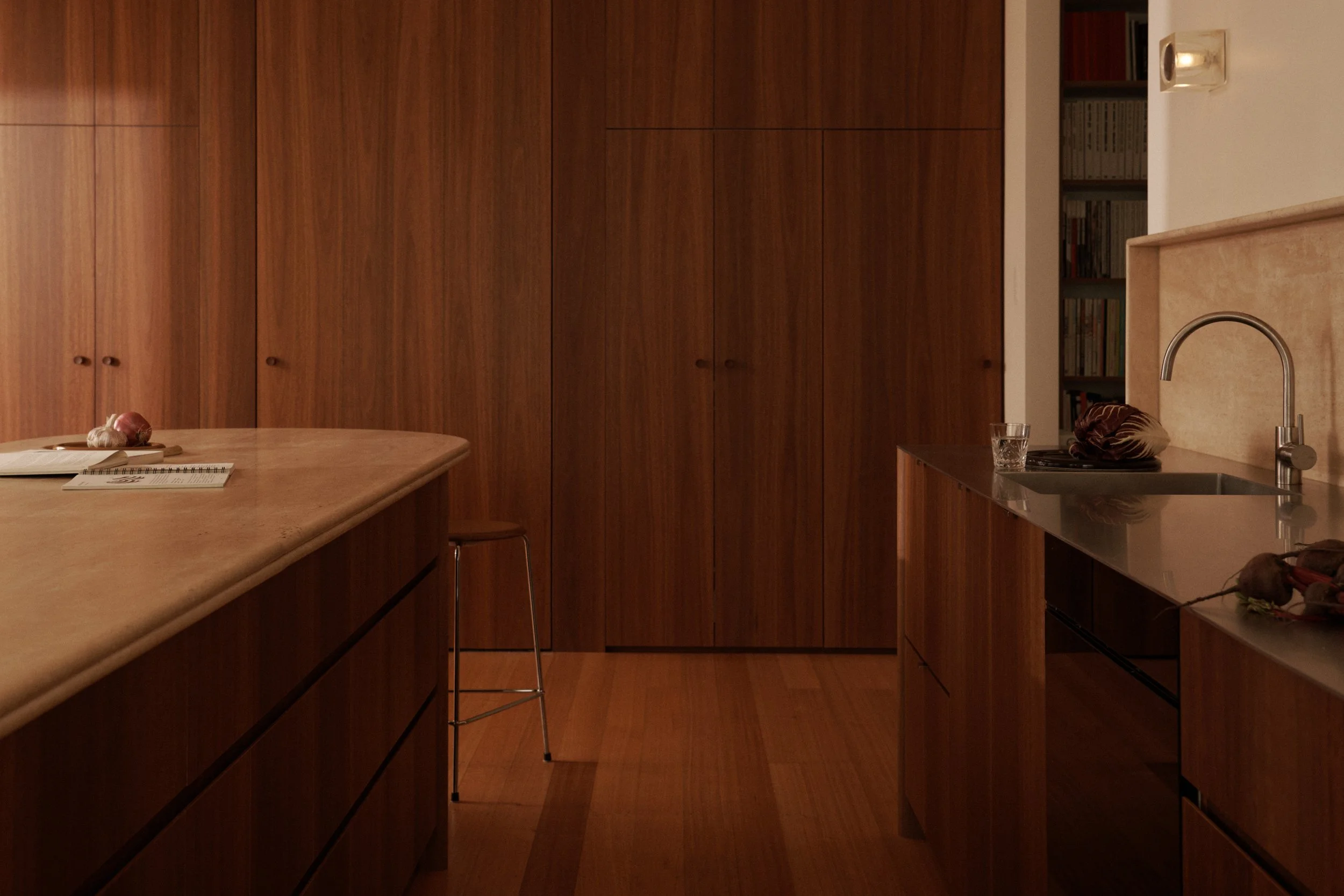
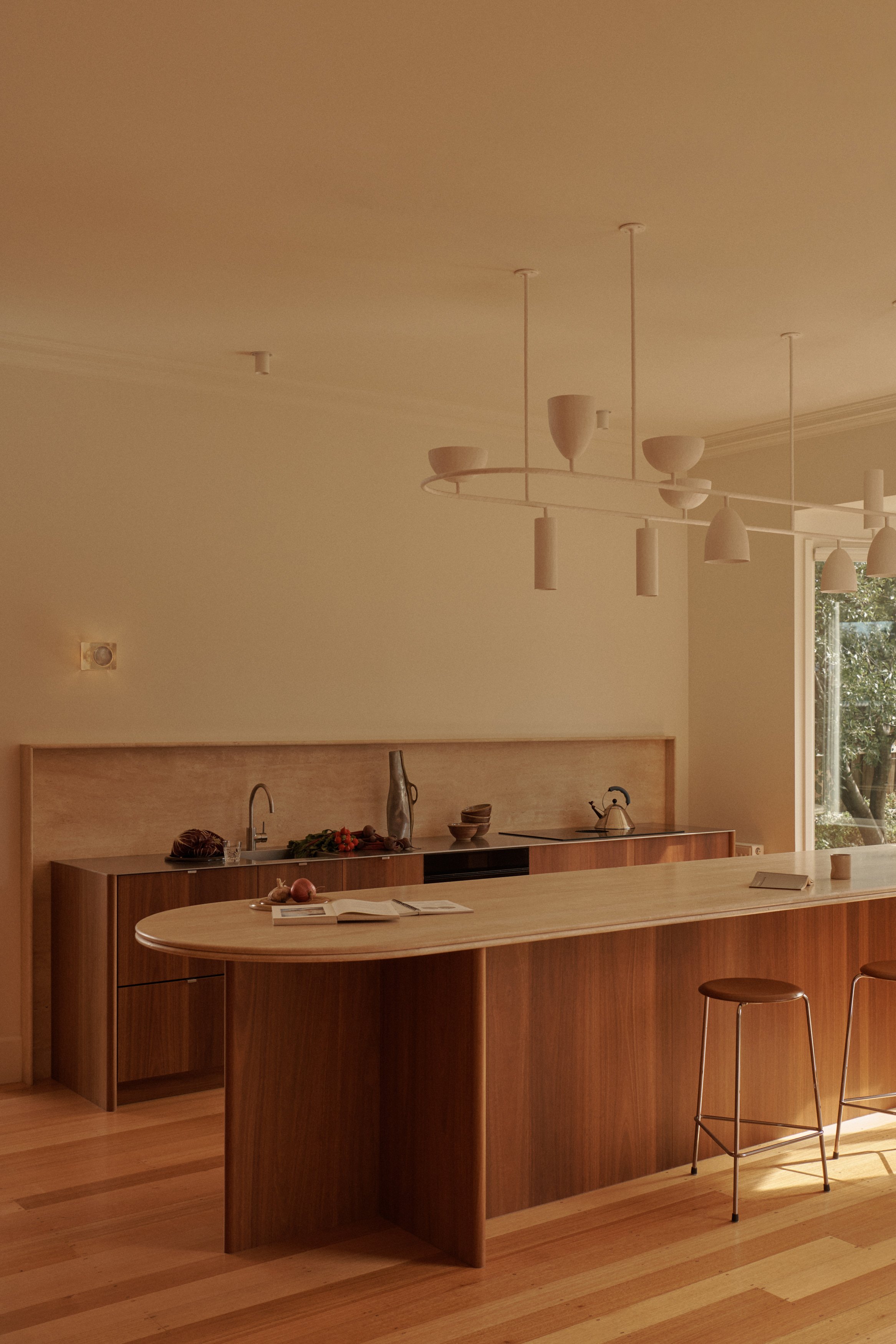
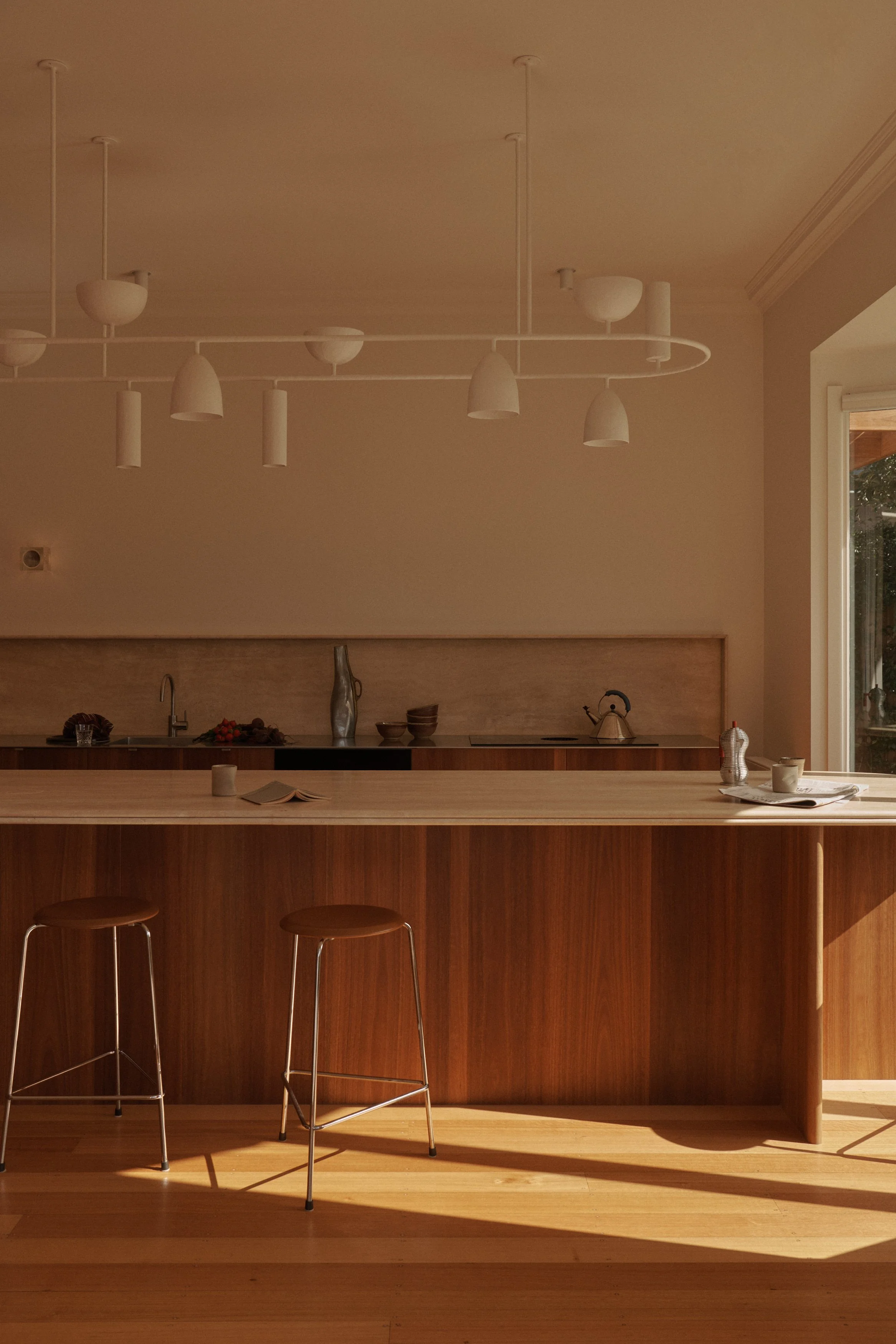
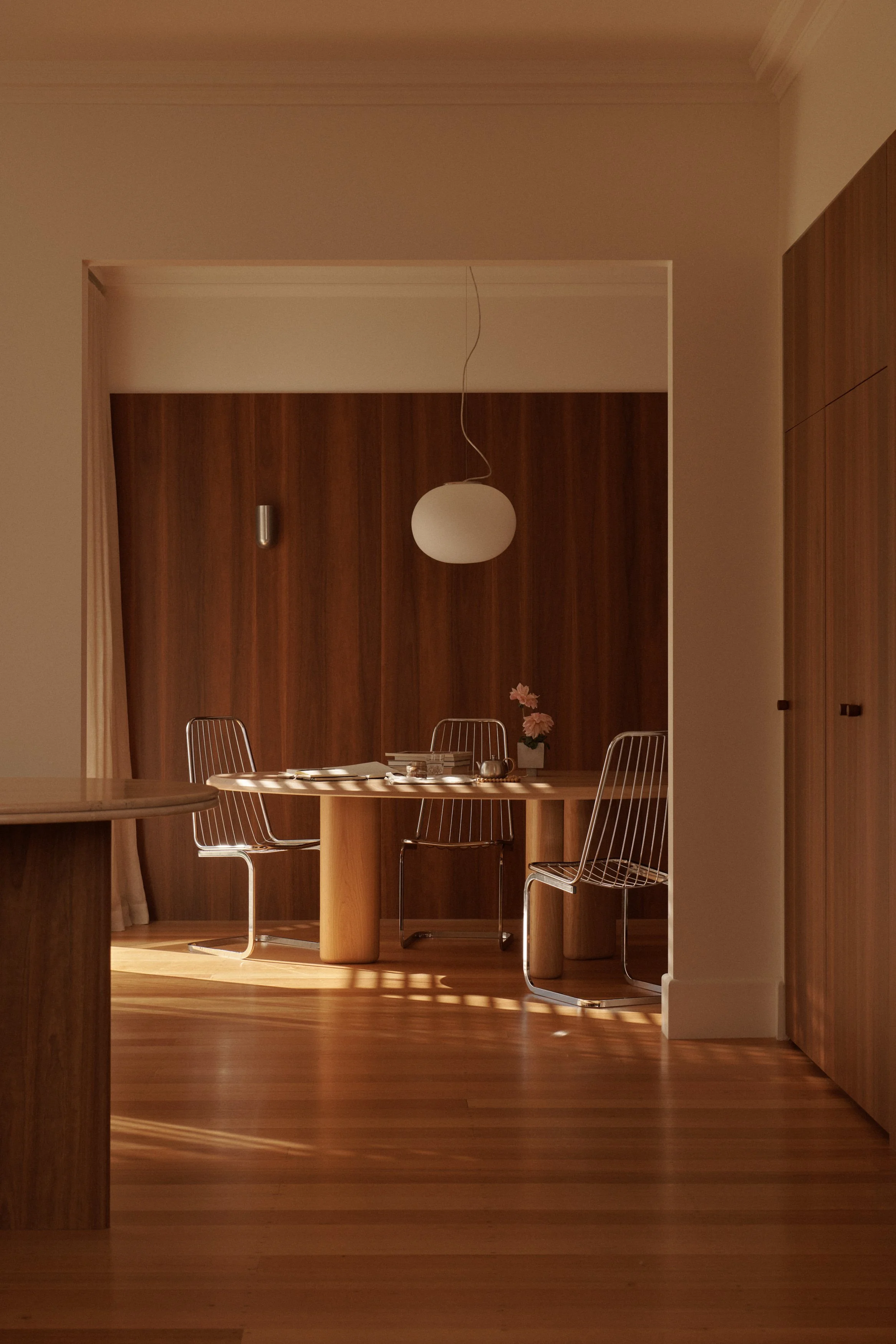
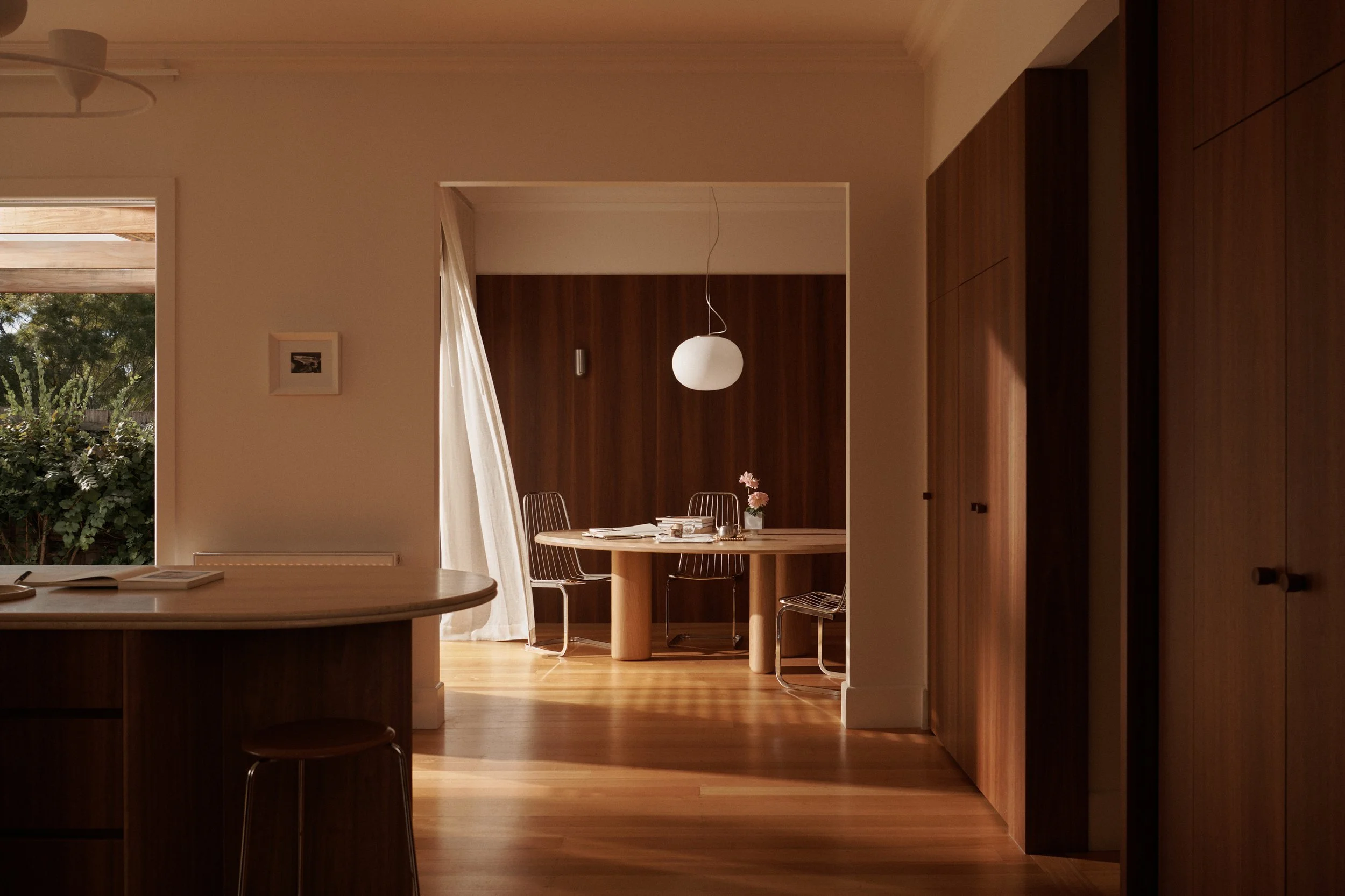
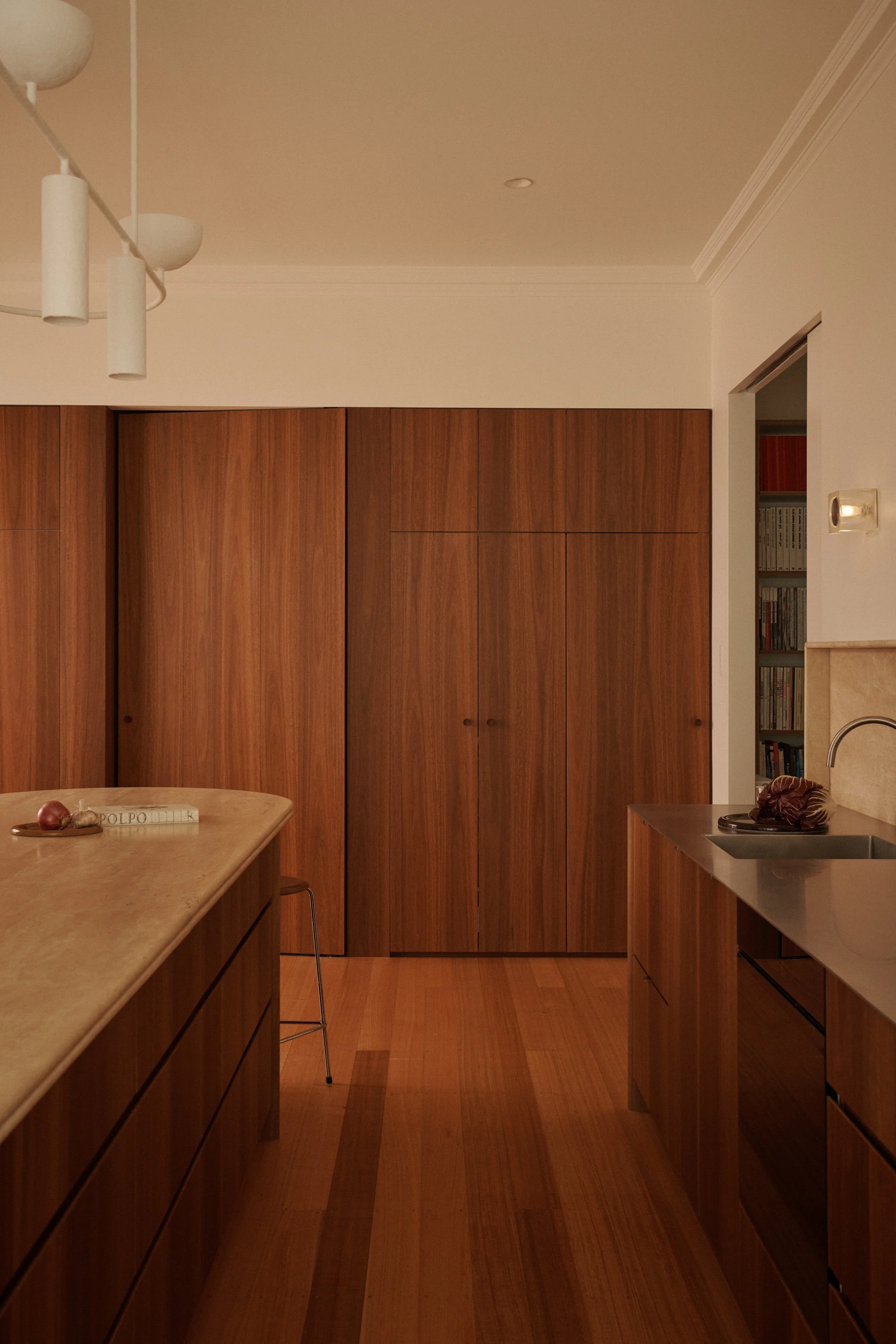
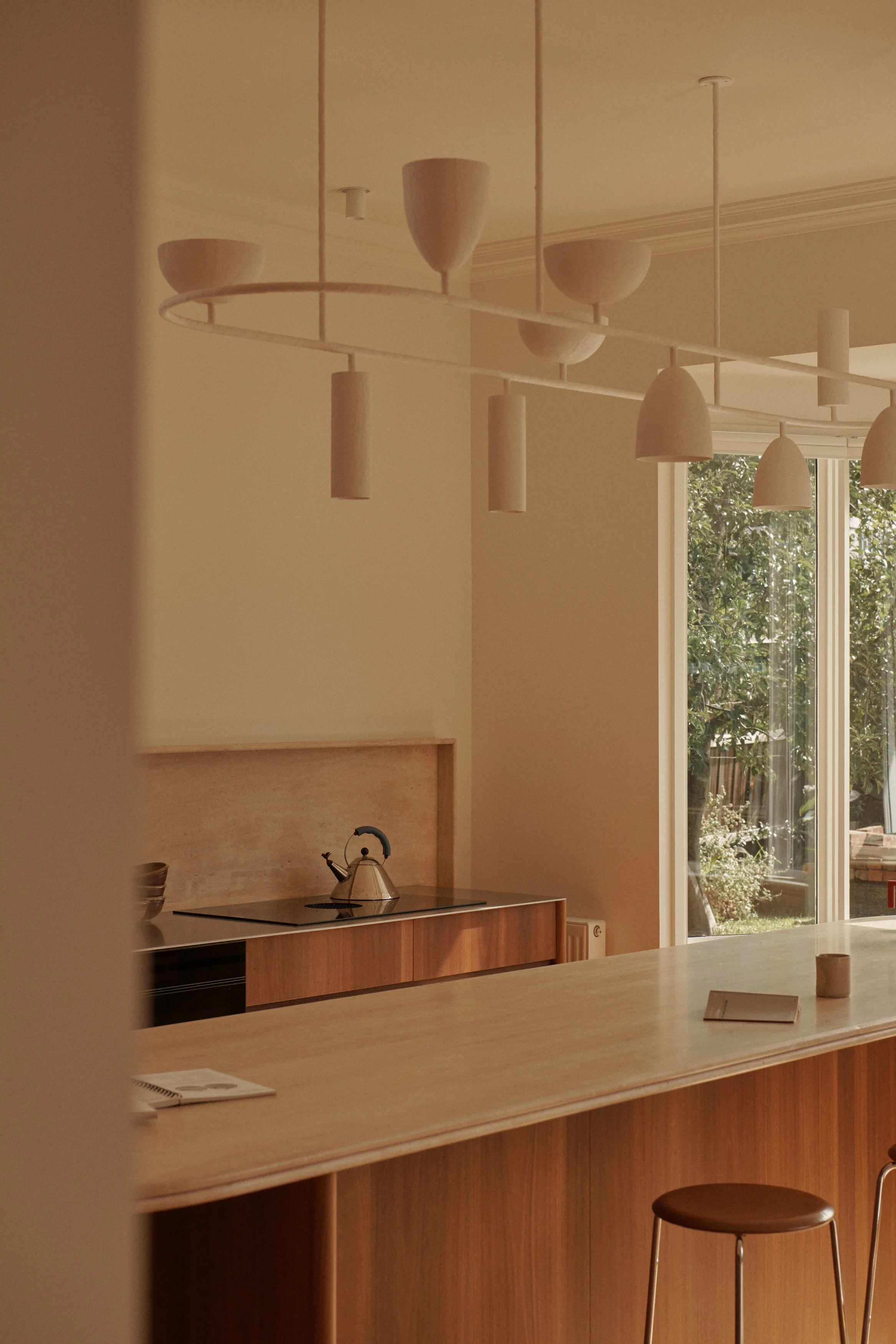
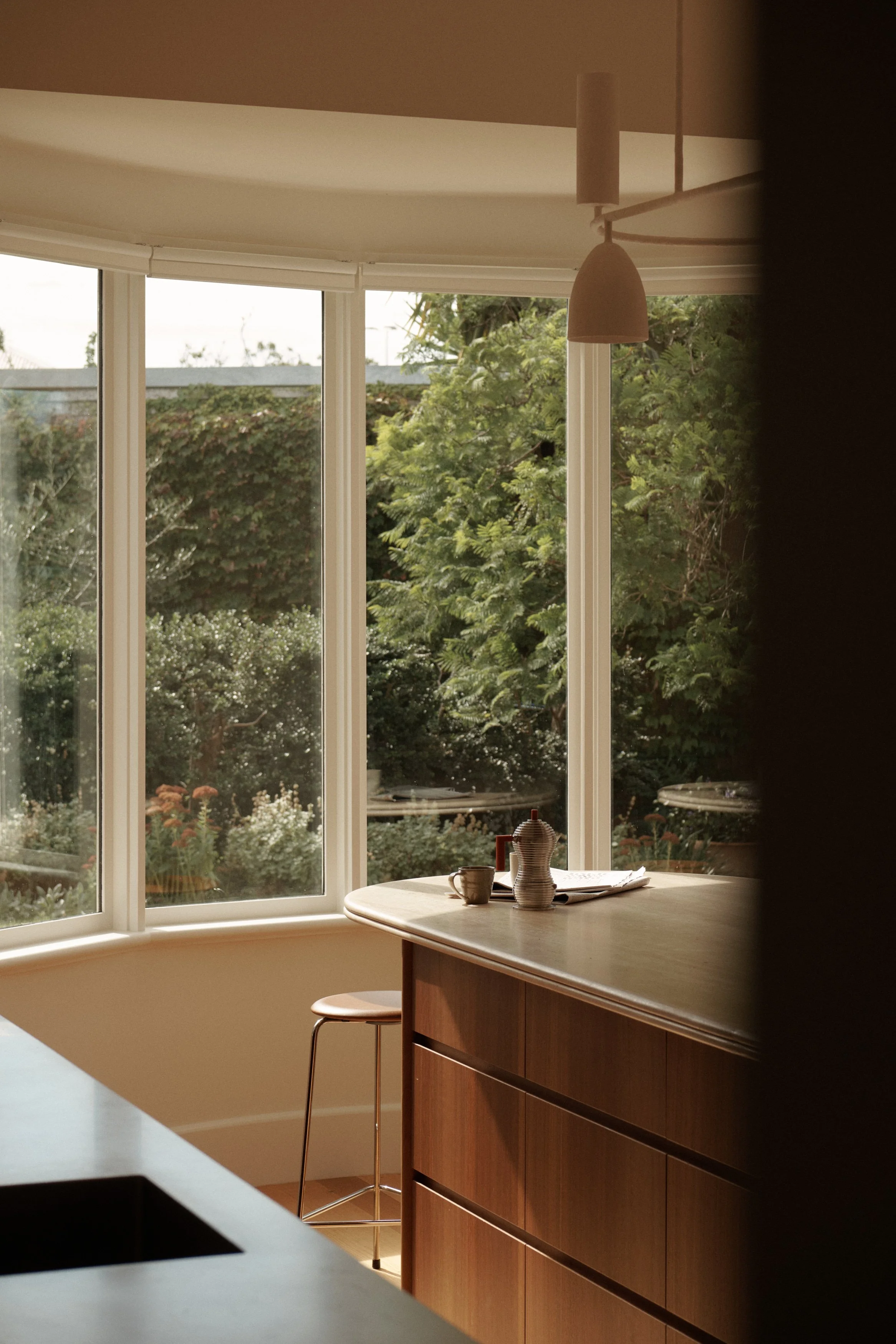
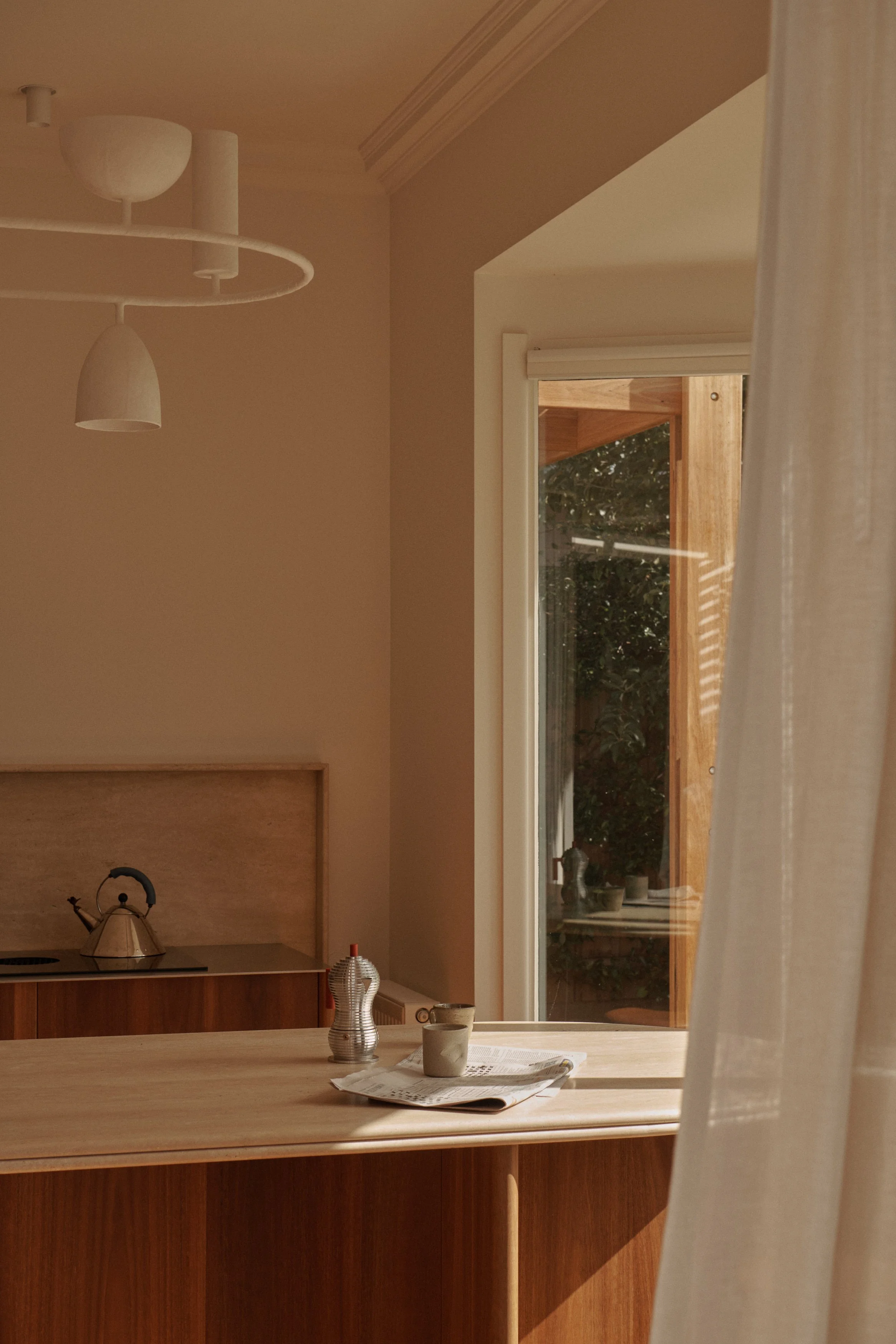
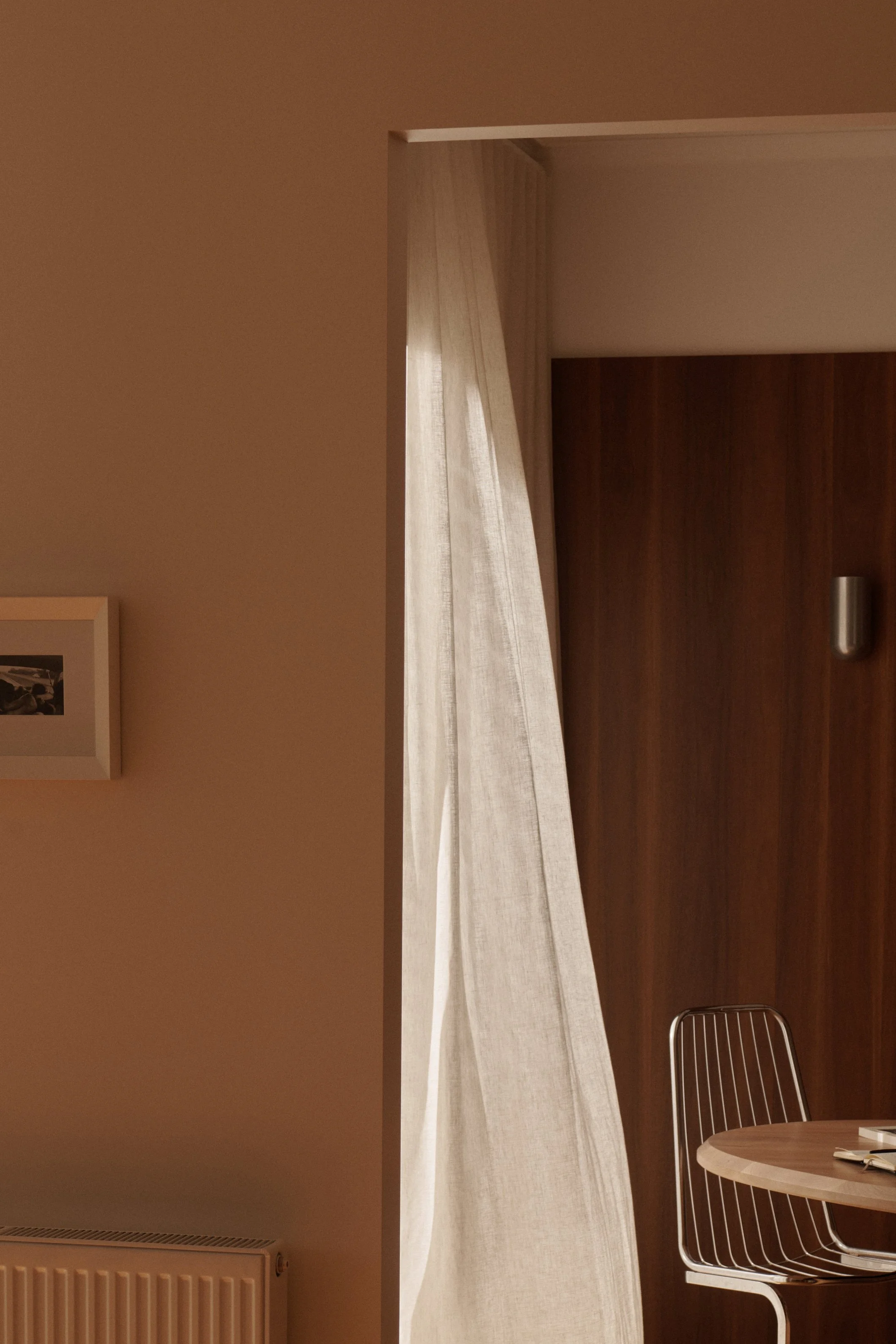
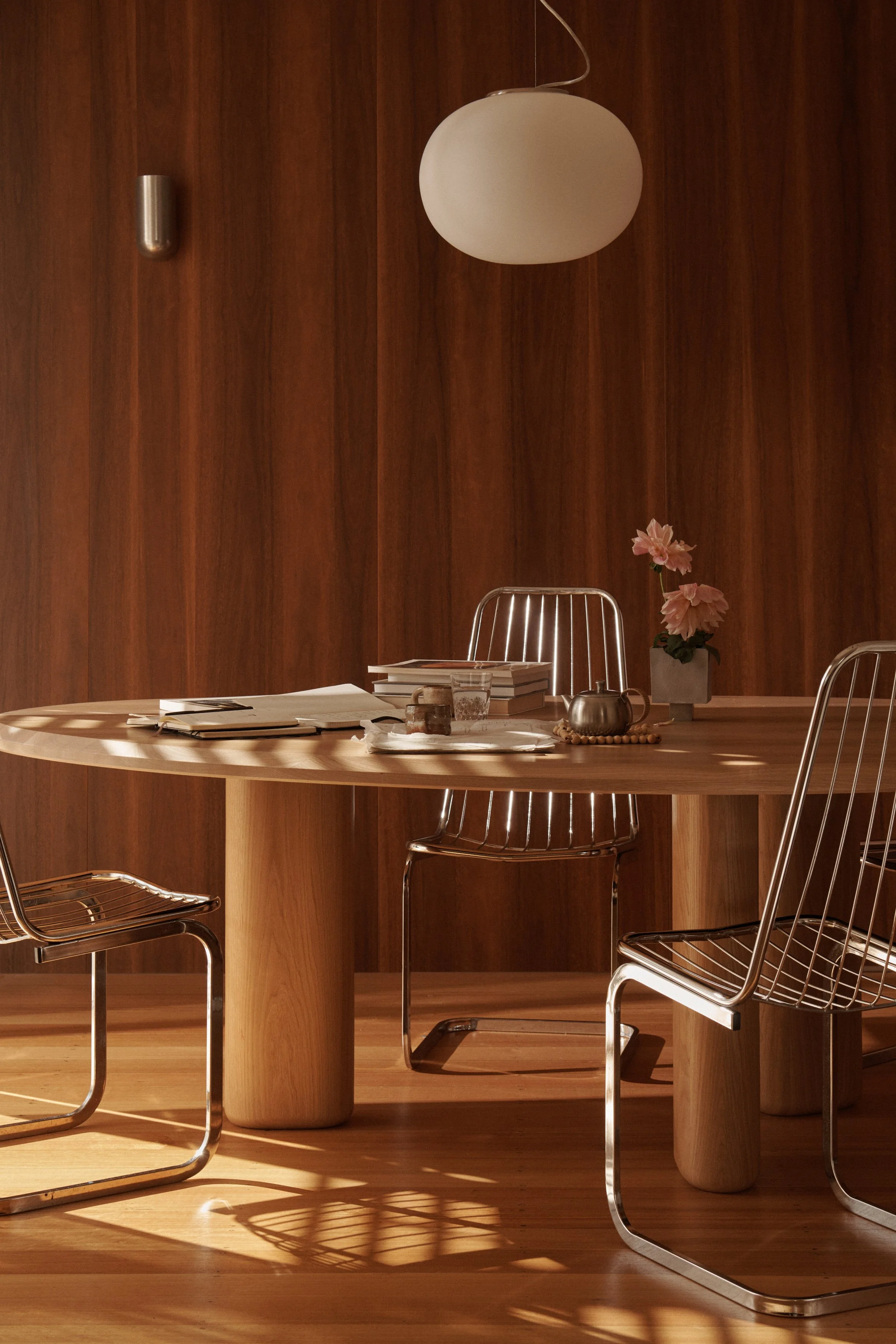
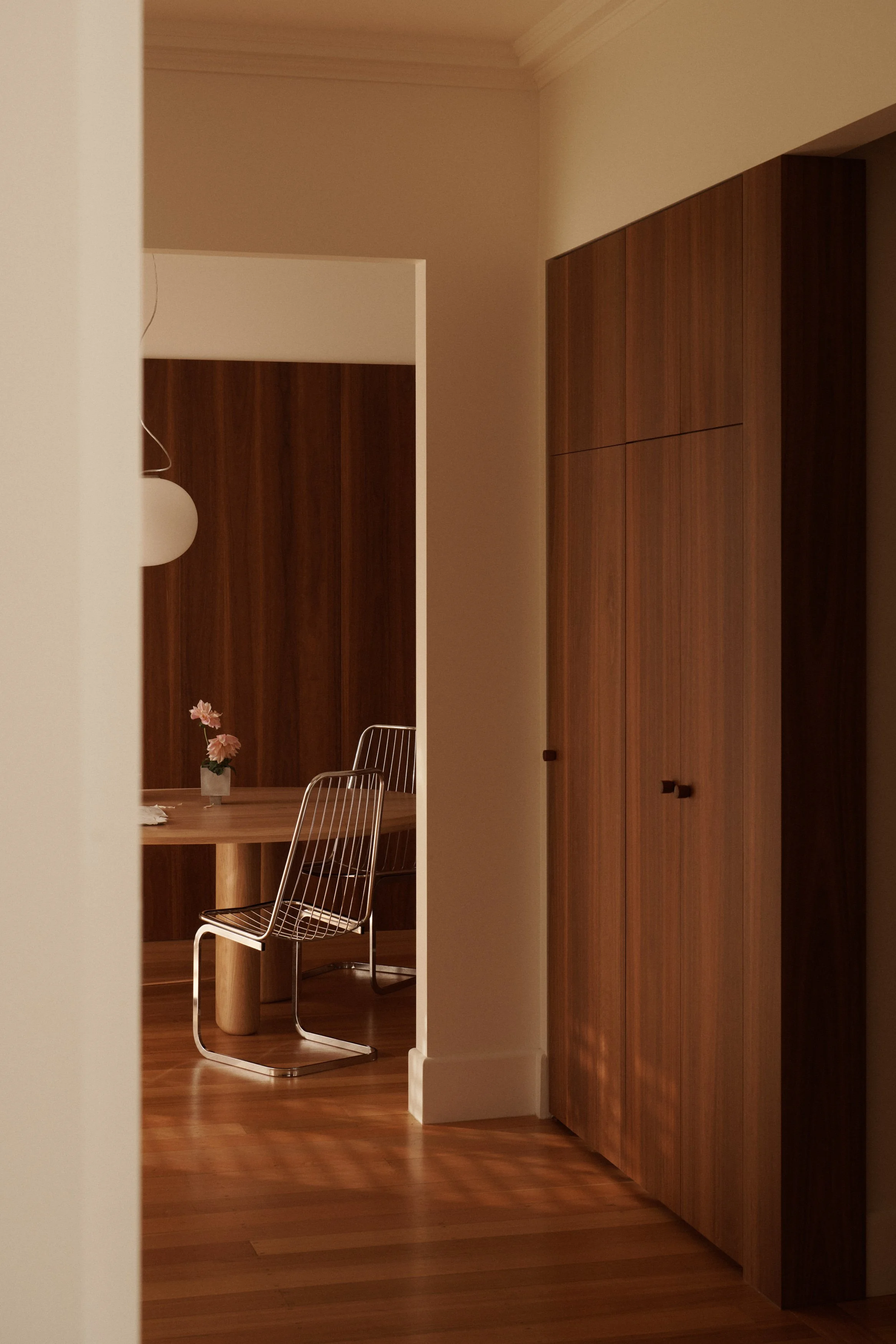
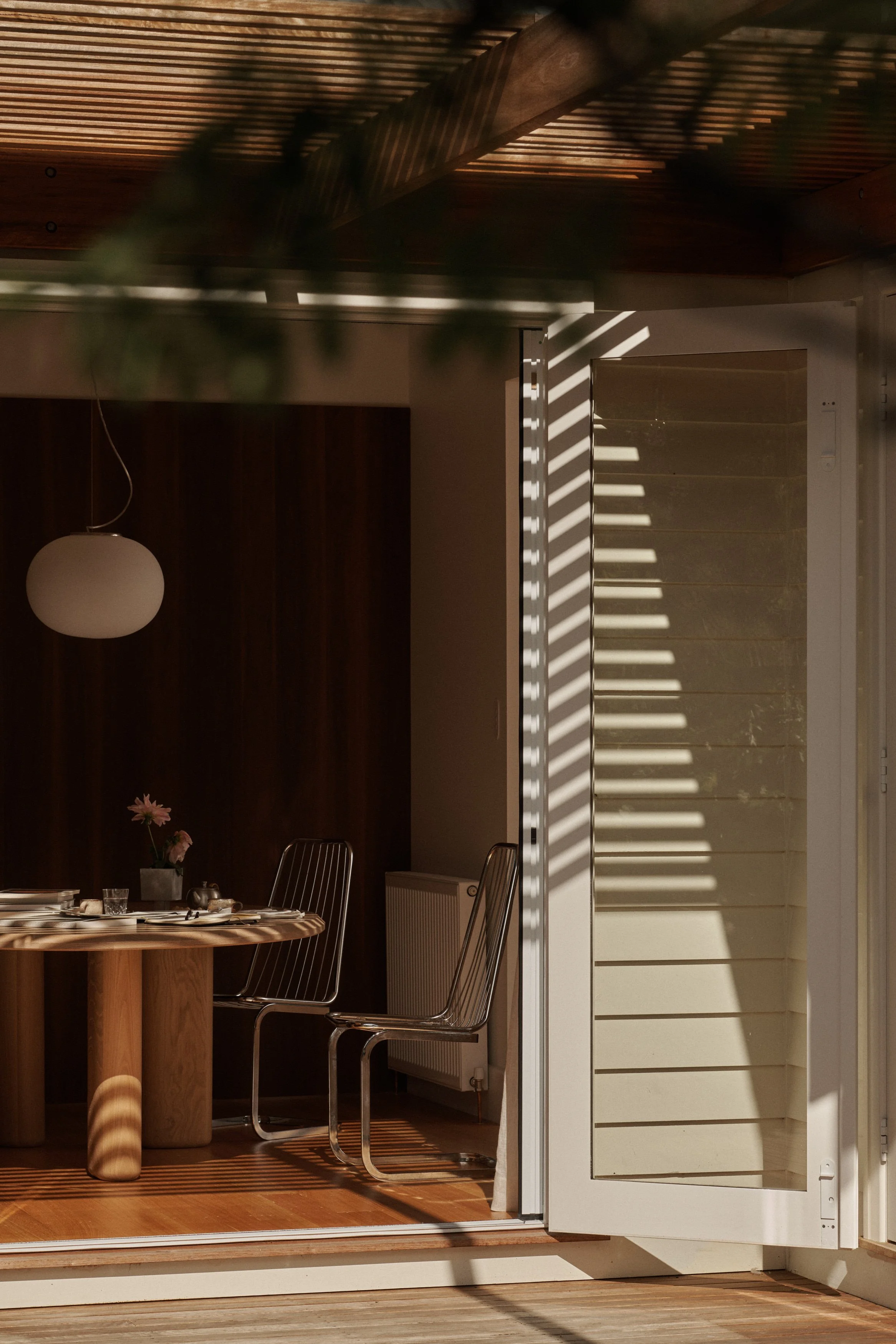
The footprint of the house remained entirely unchanged, with the primary intervention being the exchange of the kitchen and dining spaces. While both rooms continue to benefit from abundant northern light, the dining room — once oversized and underutilised — now offers a more intimate experience with a strong connection to the outdoor pergola. The kitchen, previously constrained by a pokey U-shaped layout and relegated to the periphery, is re-established as the social and functional heart of the home.
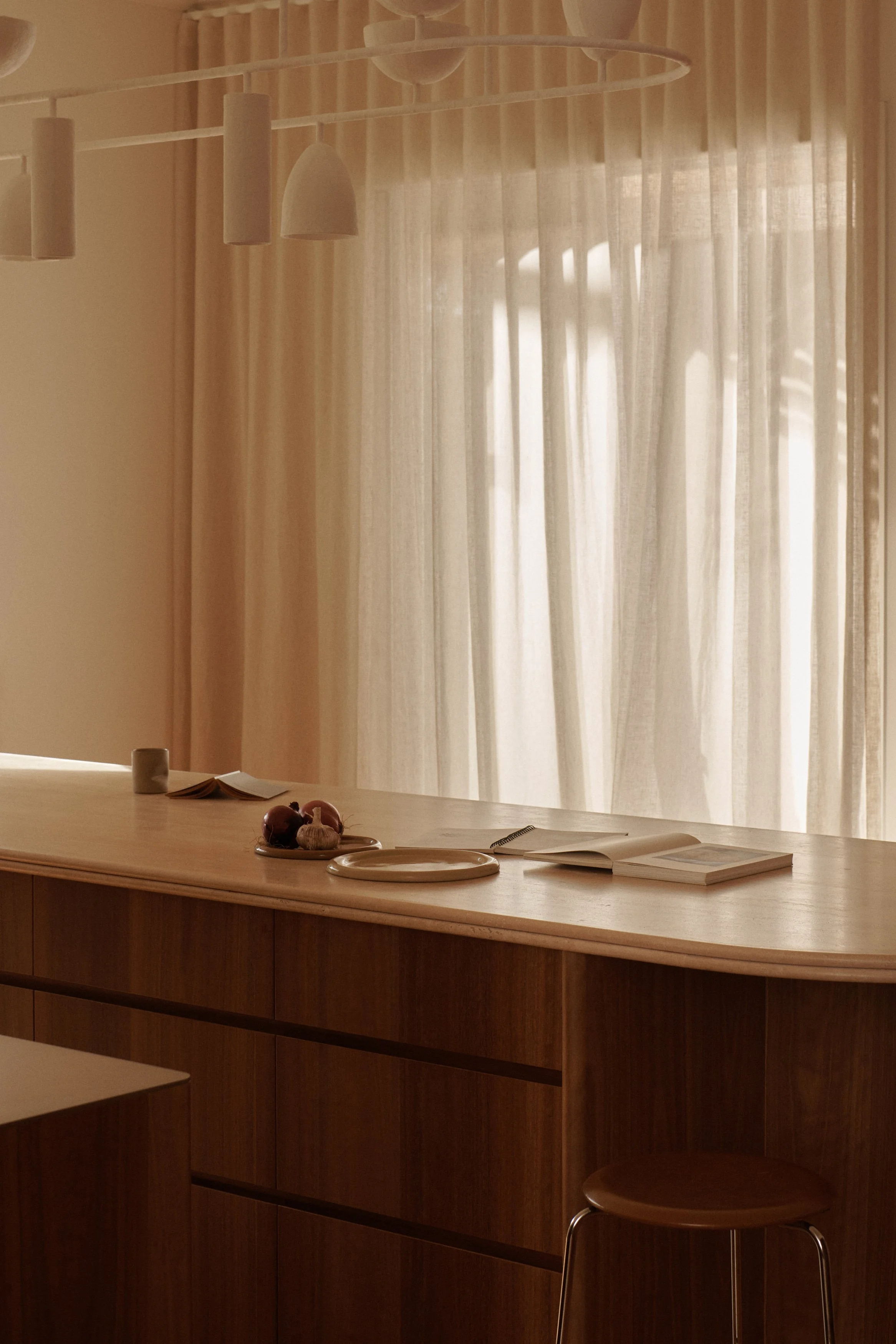
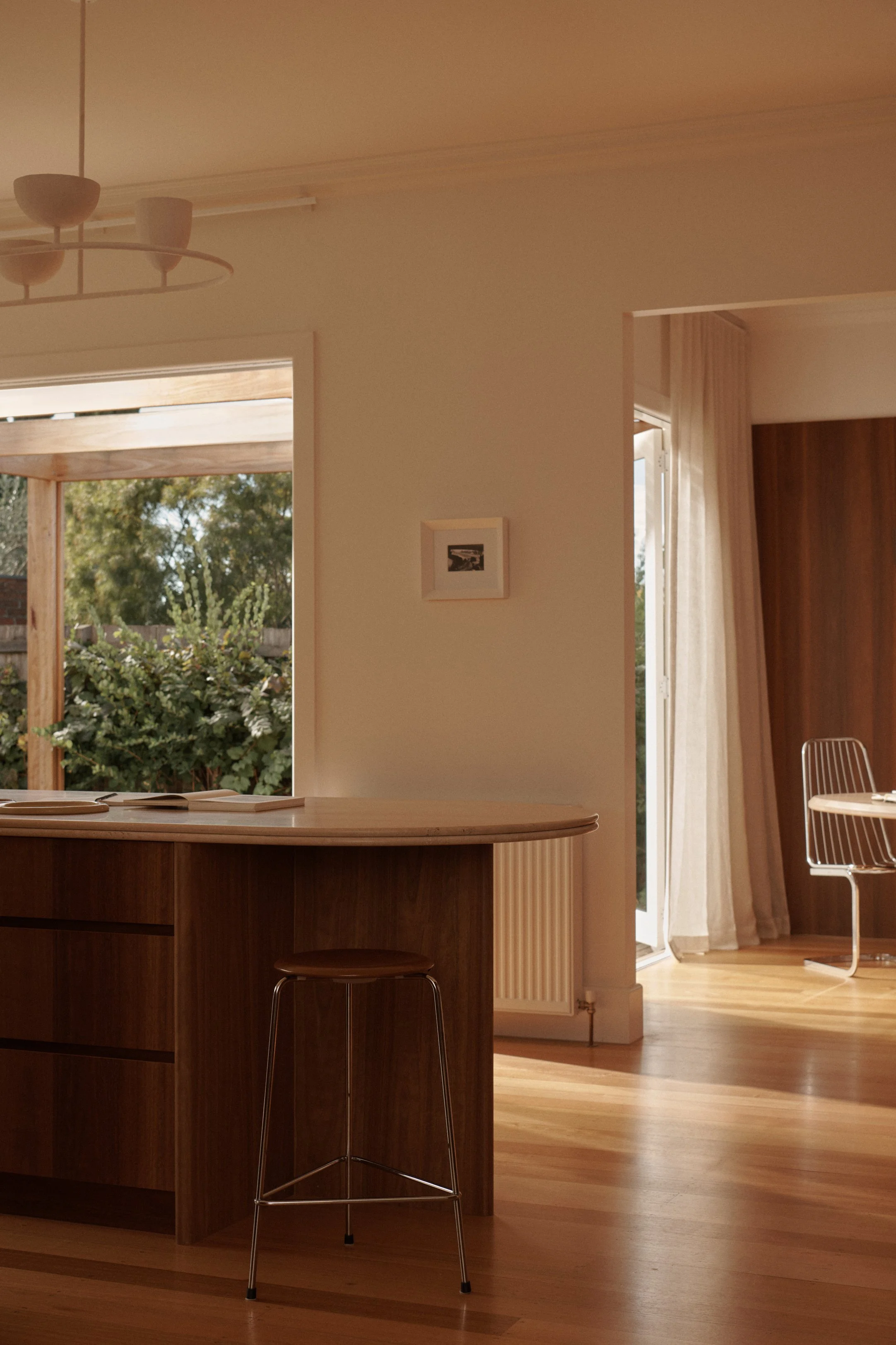
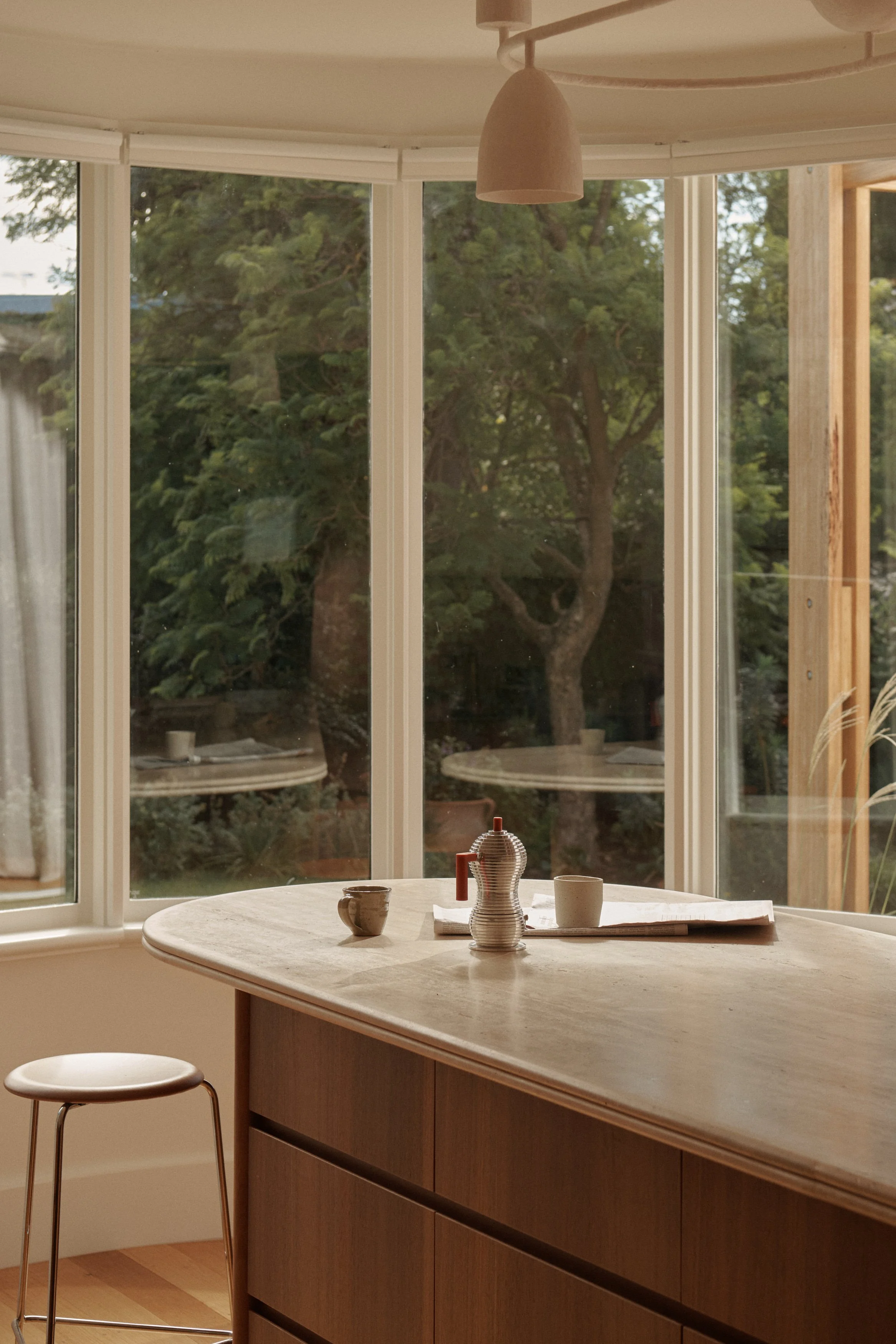
The replanning enabled a generous 4.5m island bench conceived as more than a functional kitchen element. It operates as a communal anchor within the home — a place to gather over sangria and shared meals while hosting, to slowly complete jigsaw puzzles together over weeks, to perch with a morning coffee, to work in the sun, or to linger while dinner cooks and homework is done.
Extra “wall” was added back in to tighten the openings and reduce the open plan living to allow more spaces of retreat and privacy.
We also sought to strengthen the connection to the garden, achieved through two large decks with pergolas that serve as intermediary outdoor rooms that feel both part of house and part of garden.
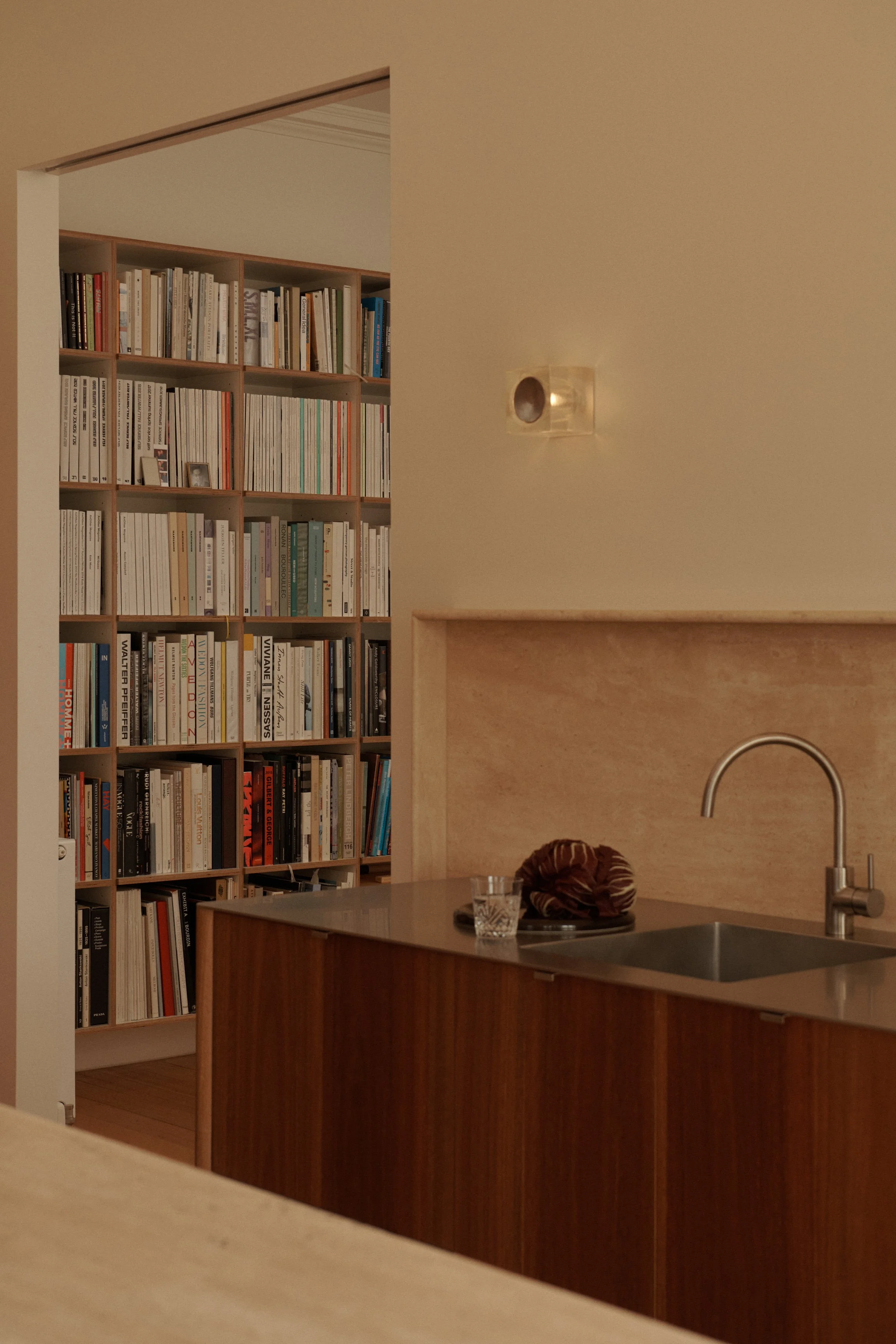
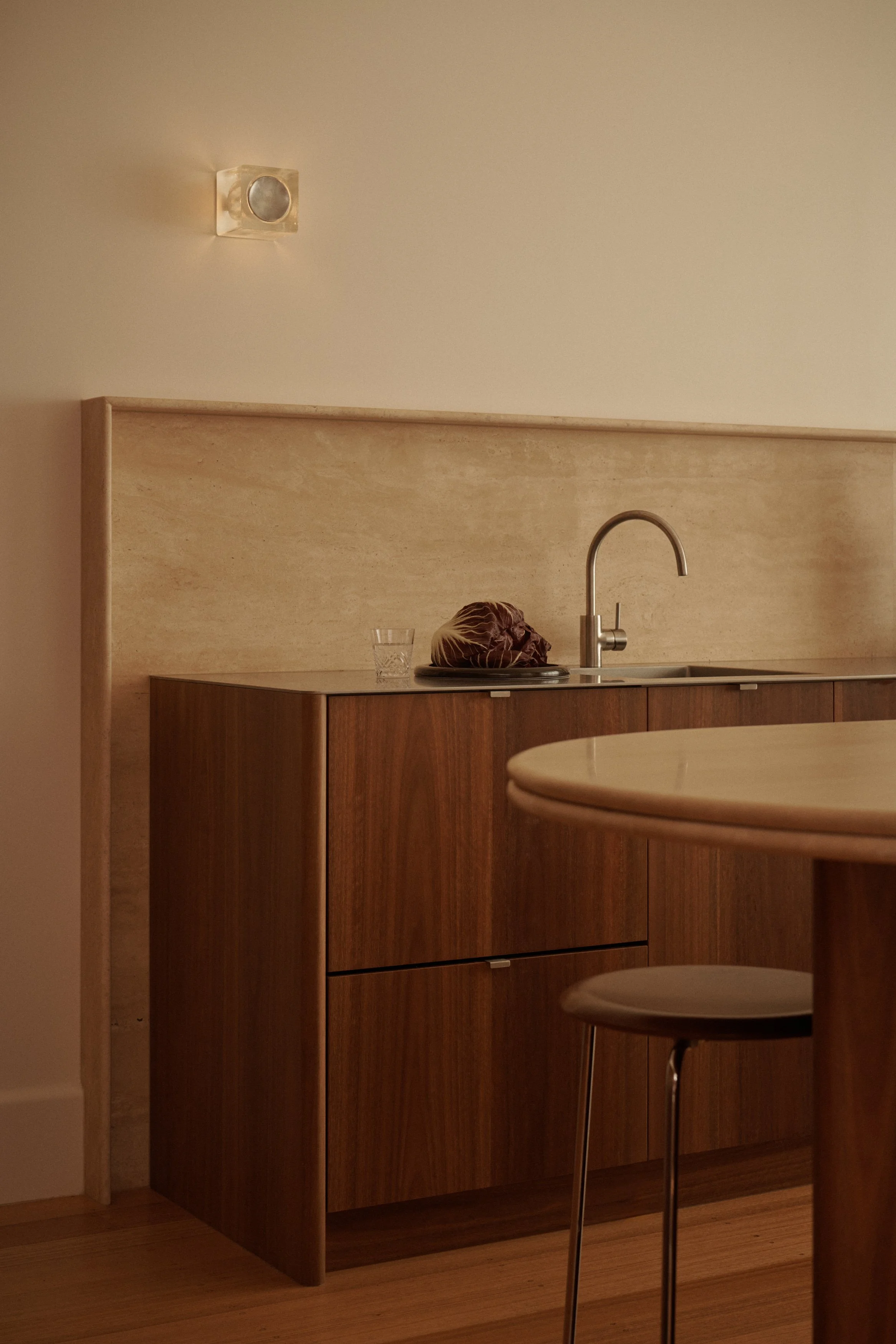
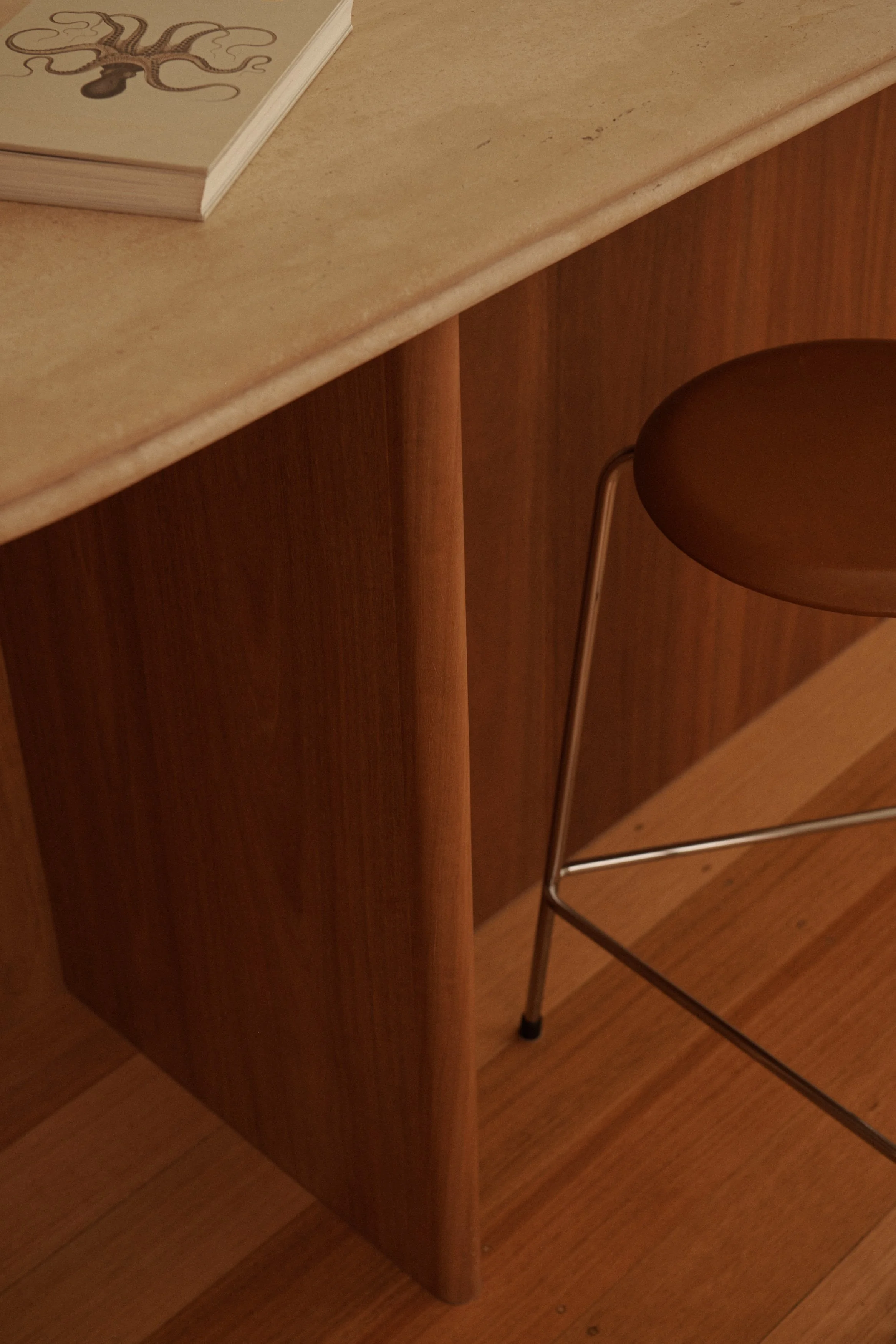
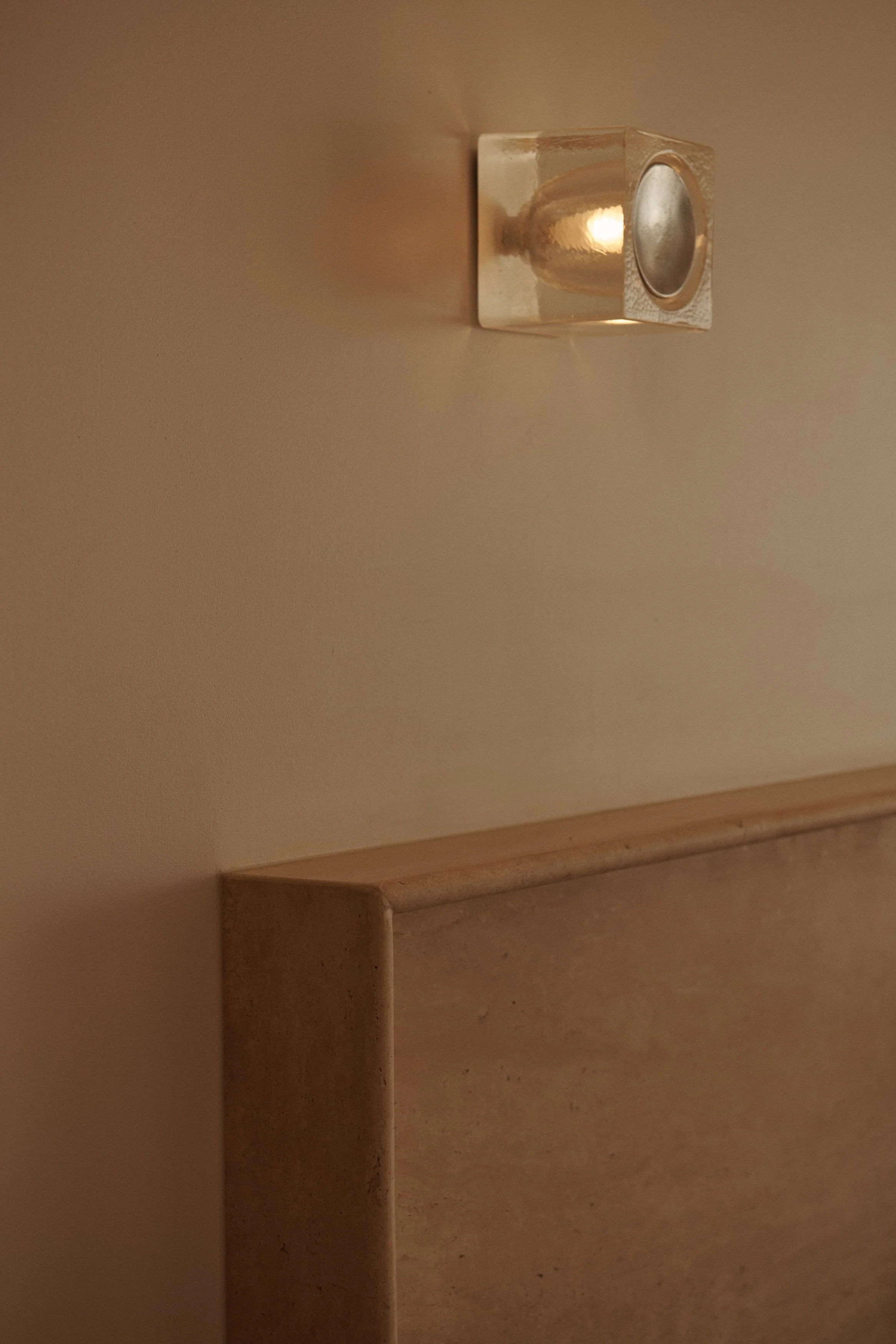
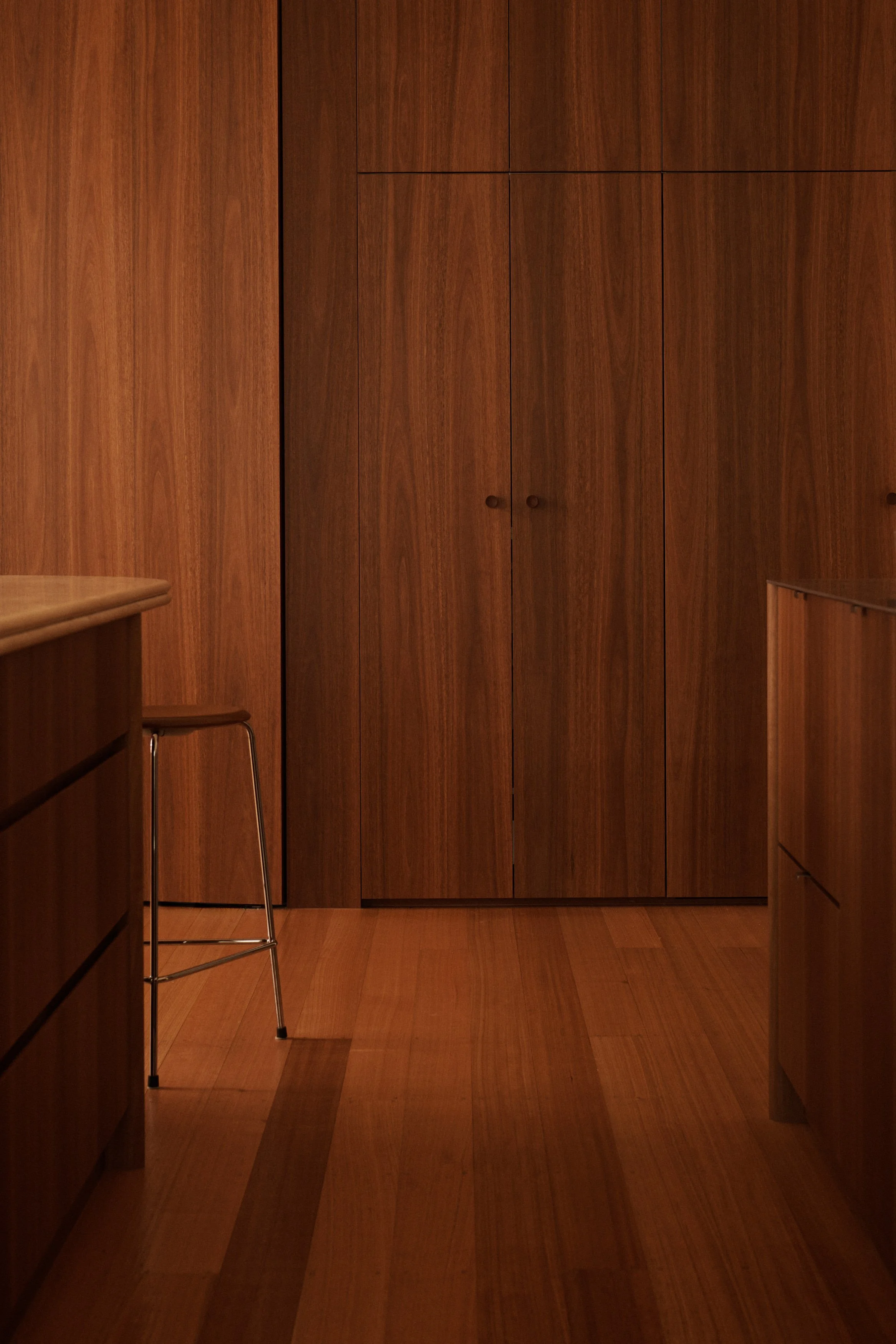
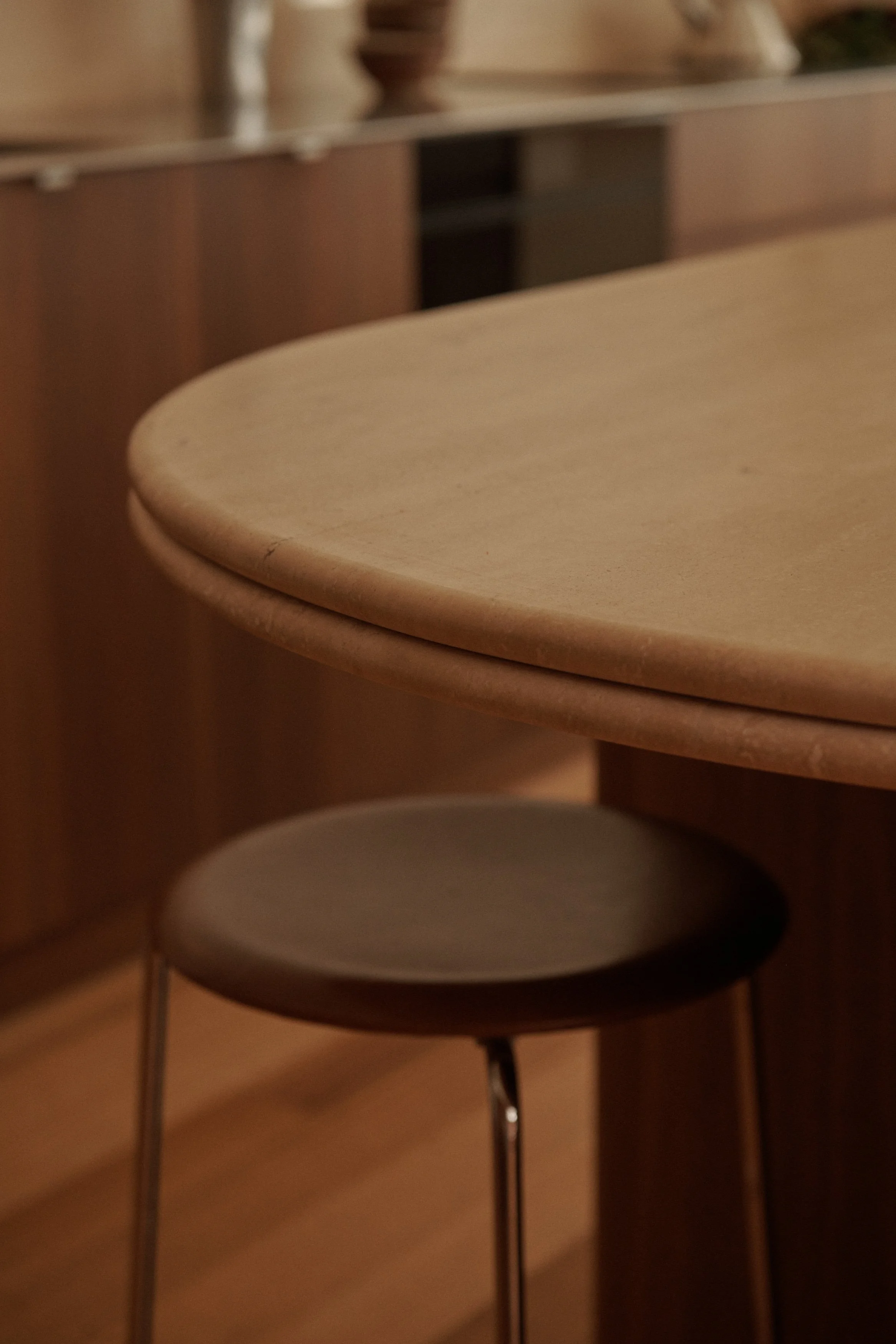
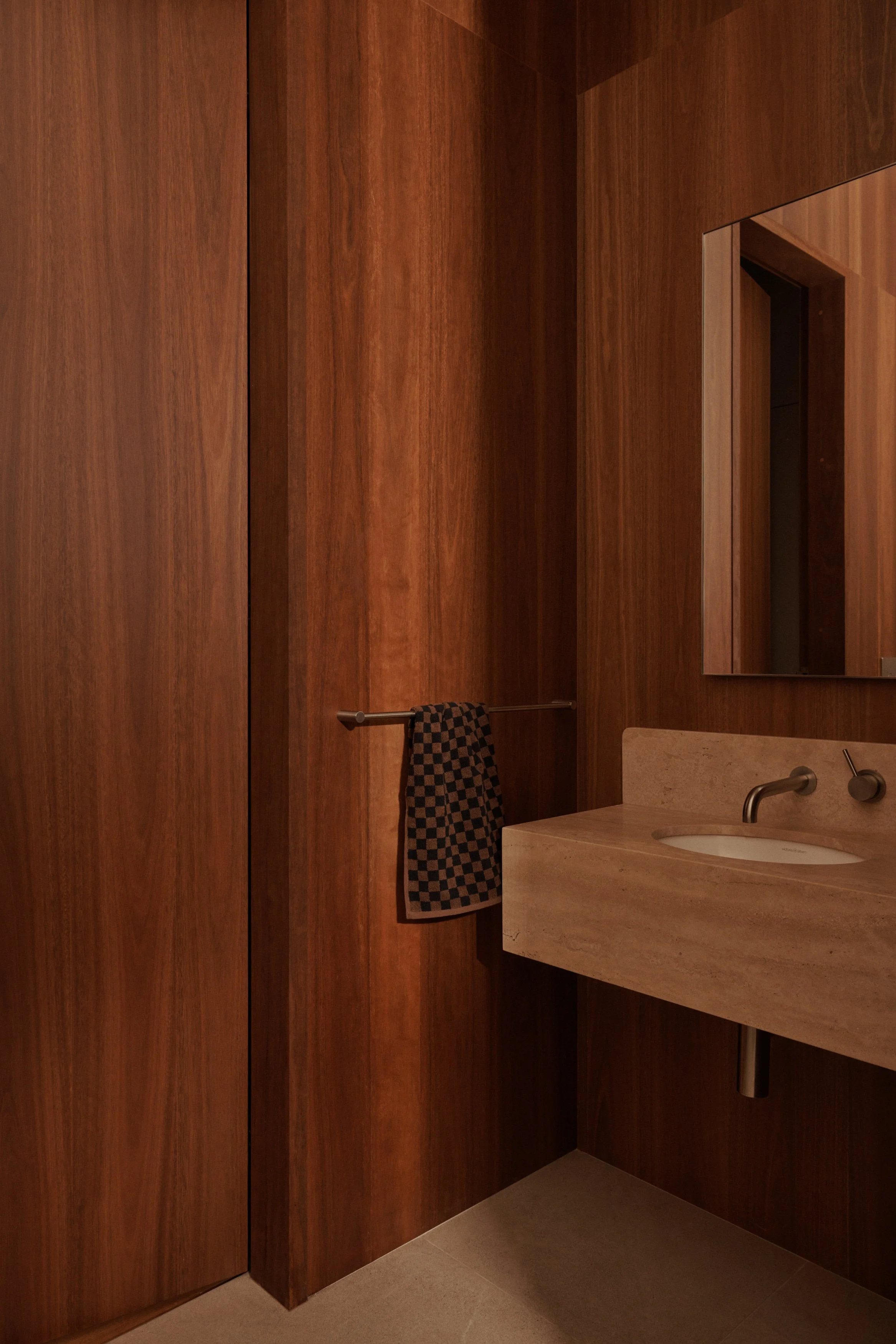
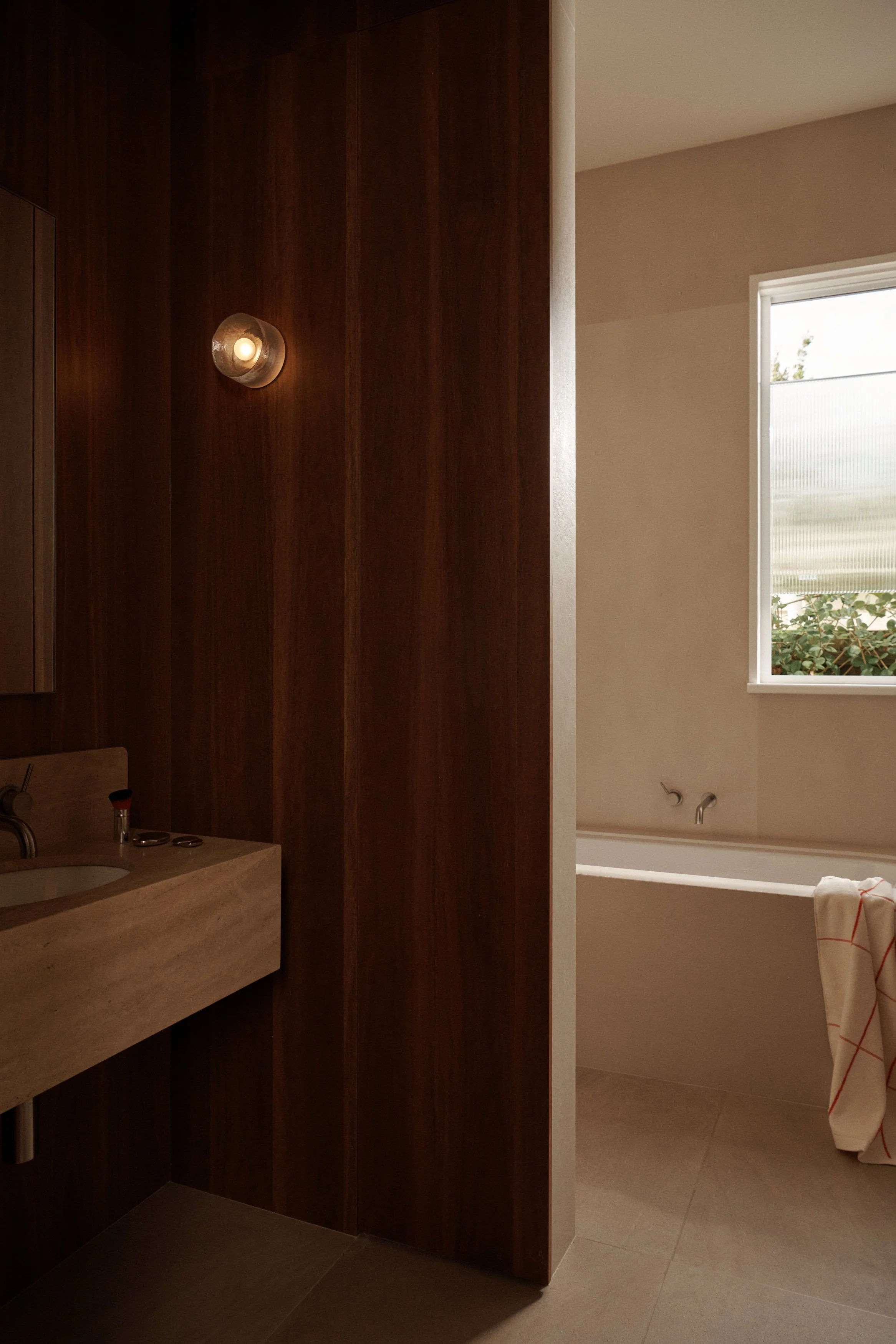
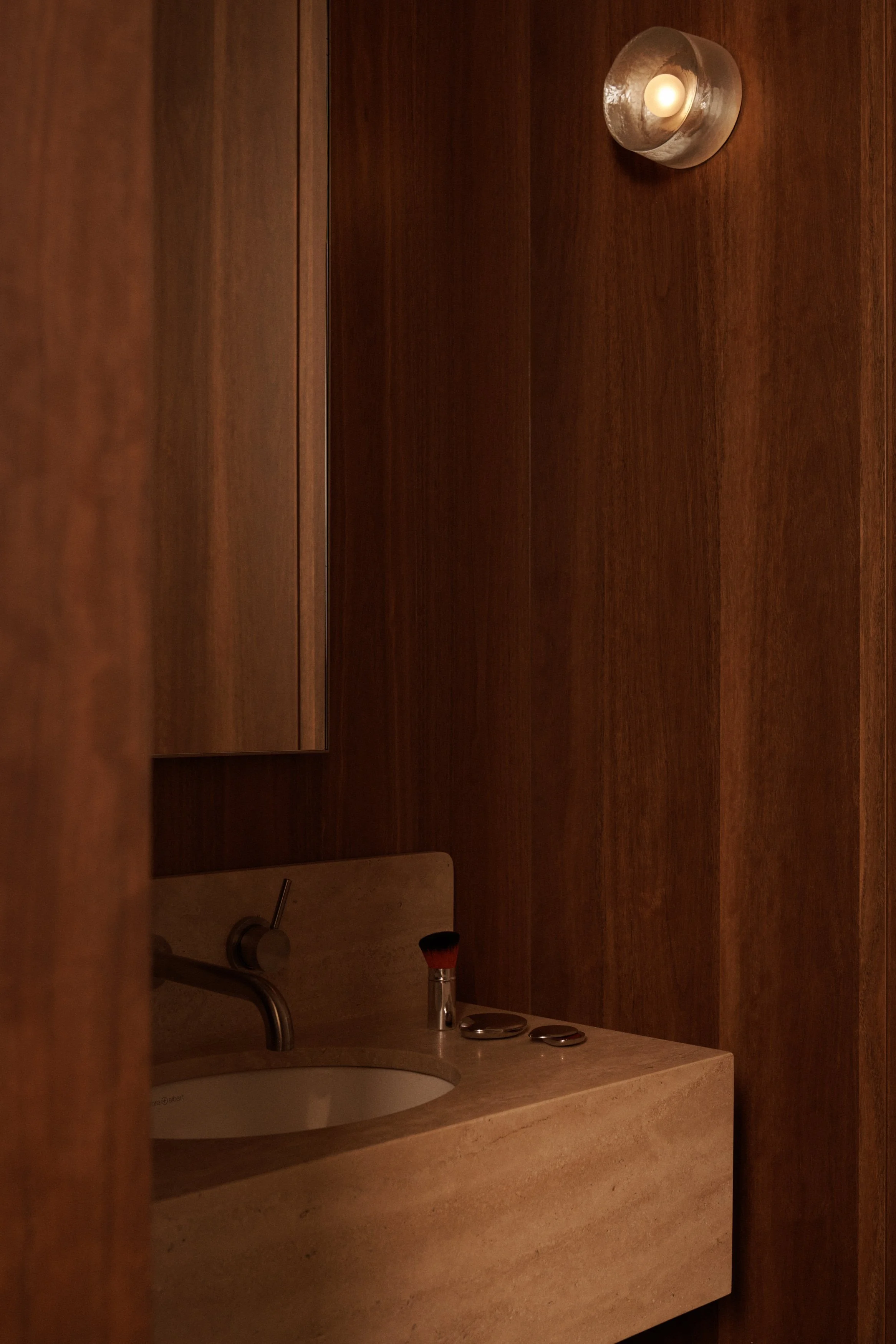
Travertine and timber introduce warmth and texture to the space. The timber softens the strong northern light that floods the home, creating a sense of balance. The tone of the travertine complements the timber and creates a bridge between the darker tones of the timber and the lighter existing material palette of the original house.
The limited material palette establishes a continuous language across the project, linking the new bathroom at the front of the house with the new kitchen and dining spaces at the rear. This continuity in materiality was central to creating a cohesive home.
Timber was also used to articulate moments of transition, with both the entry to the new kitchen and bathroom entered through timber lined thresholds.
The use of travertine to the bench top and rear kitchen shroud enabled the incorporation of bullnose detailing inspired by the curves of the bay windows. While the bench follows the curve of the bay window in plan view, the single and double bullnose profiles further reinforce the curvature in the other plane, contributing to a more cohesive and unified spatial language throughout the home.
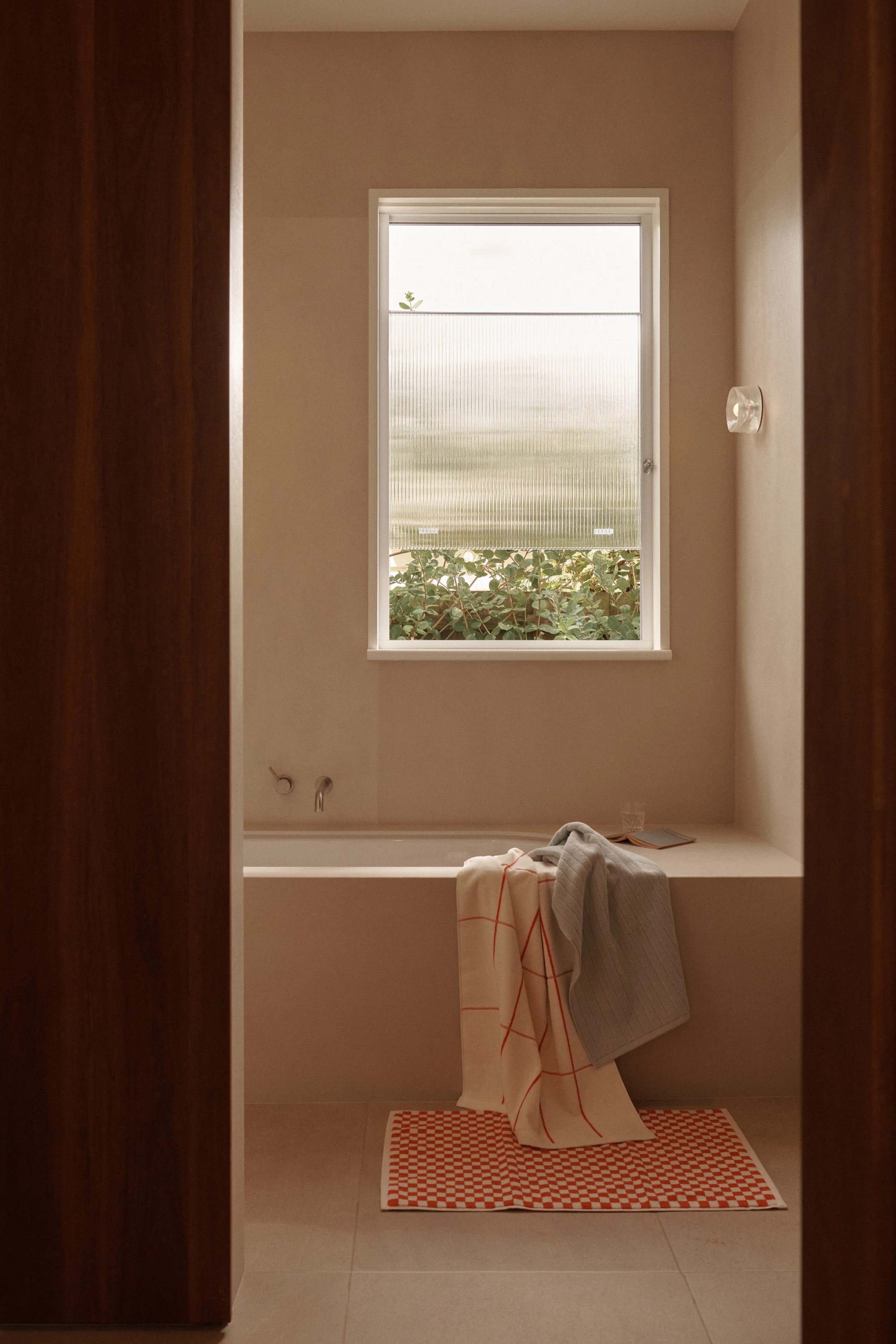
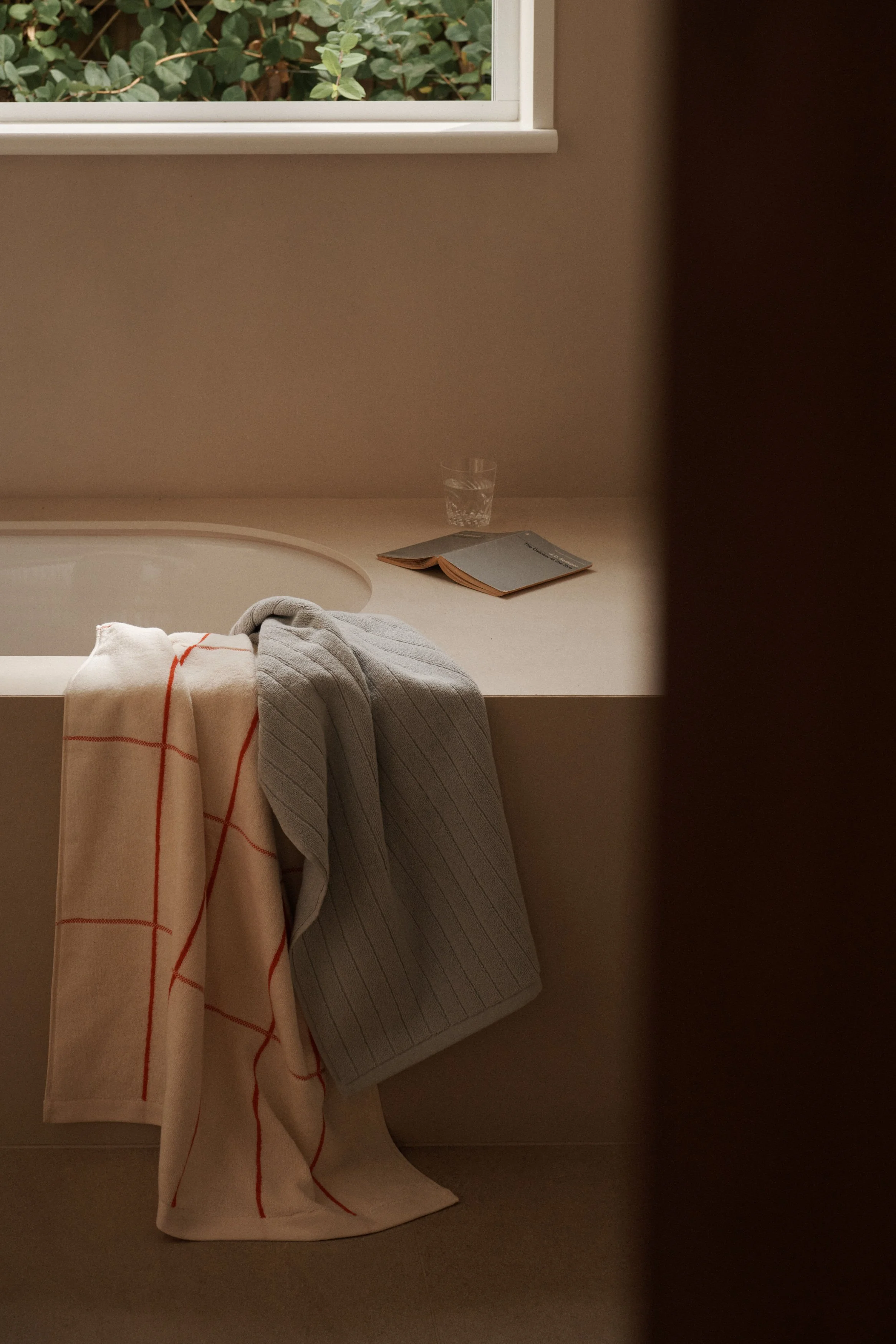
The main bathroom was renovated within the existing footprint, retaining the original window and proportions. The layout was reconfigured to improve sight lines from the hallway and establish a more spatially layered experience, creating almost an extra room within the bathroom itself. Timber panelling defines the dry zone, introducing warmth, ambience and a calming backdrop that contrasts with the more utilitarian tiled wet areas.
By working within the original footprint, the project reinforces a sustainable approach centred on repair and adaptation rather than demolition and rebuild.
Given the series of recent additions, a restrained approach was taken – making minimal, considered interventions to achieve a cohesive home that reconciles the many existing layers.